
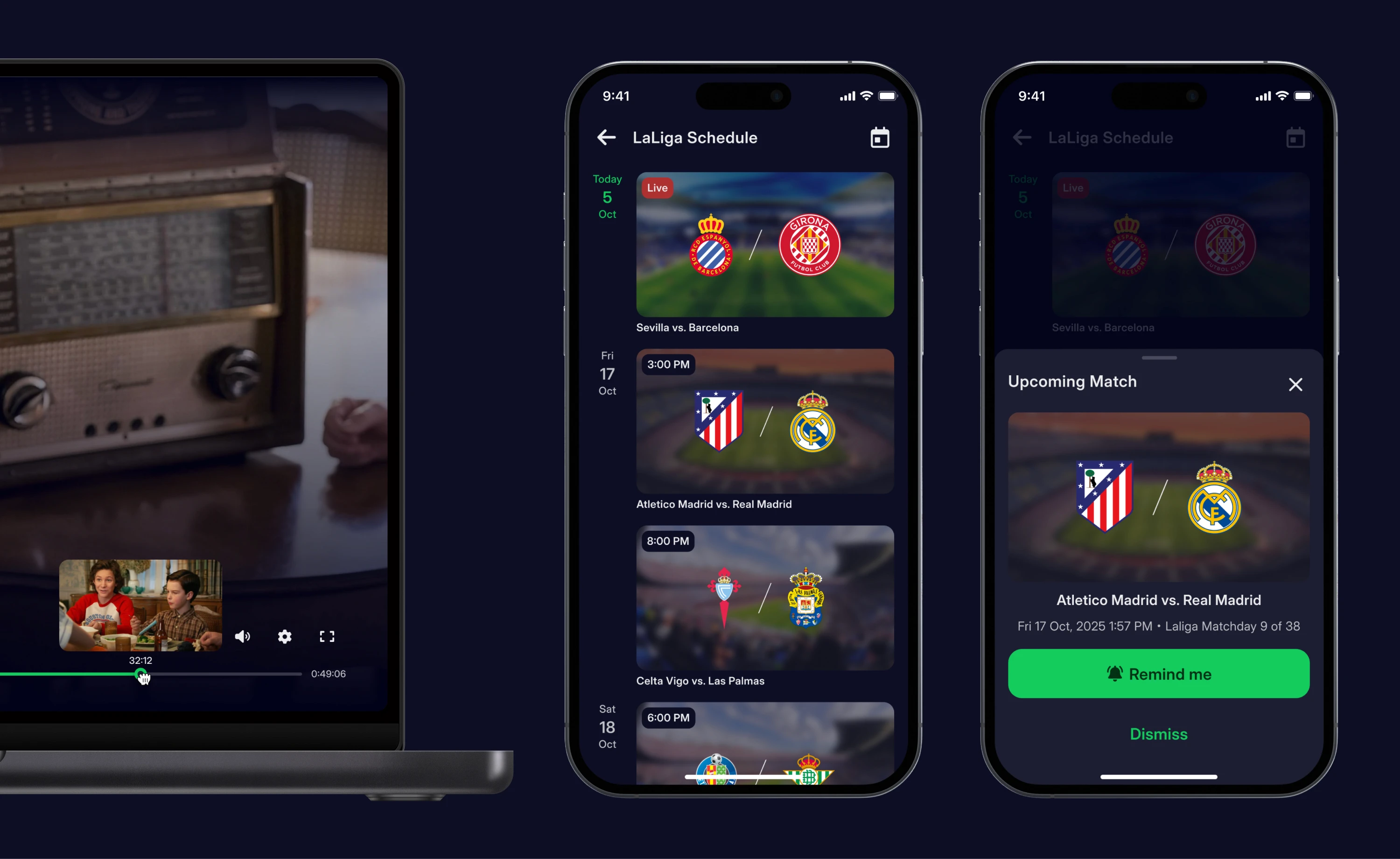
The challenge wasn't simply designing a streaming interface. It was creating one product that could stay consistent across devices that behave very differently.
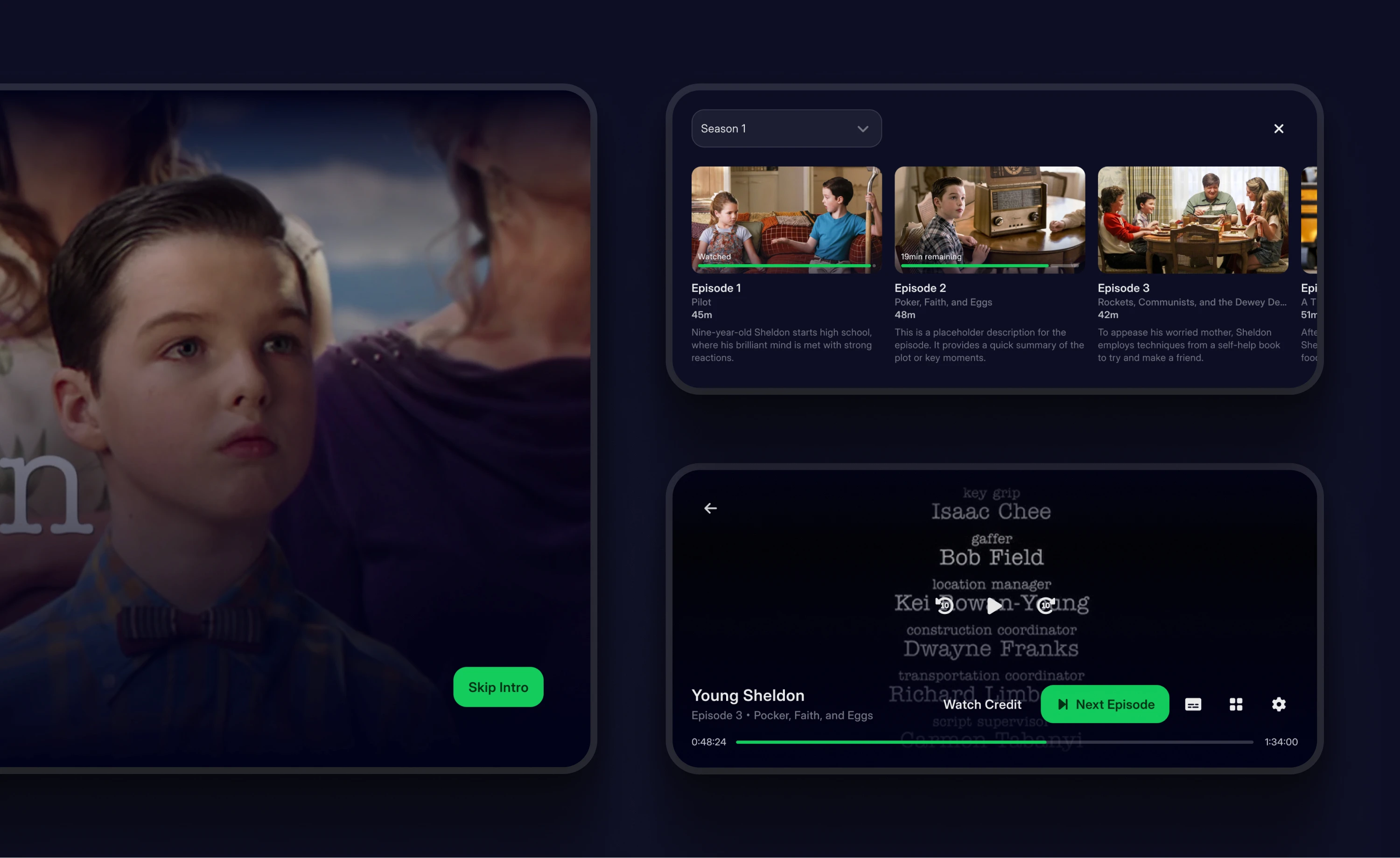
Touch on mobile, responsive layouts on the web, remote navigation on TV, and different requirements across Samsung and LG all needed their own interaction patterns.
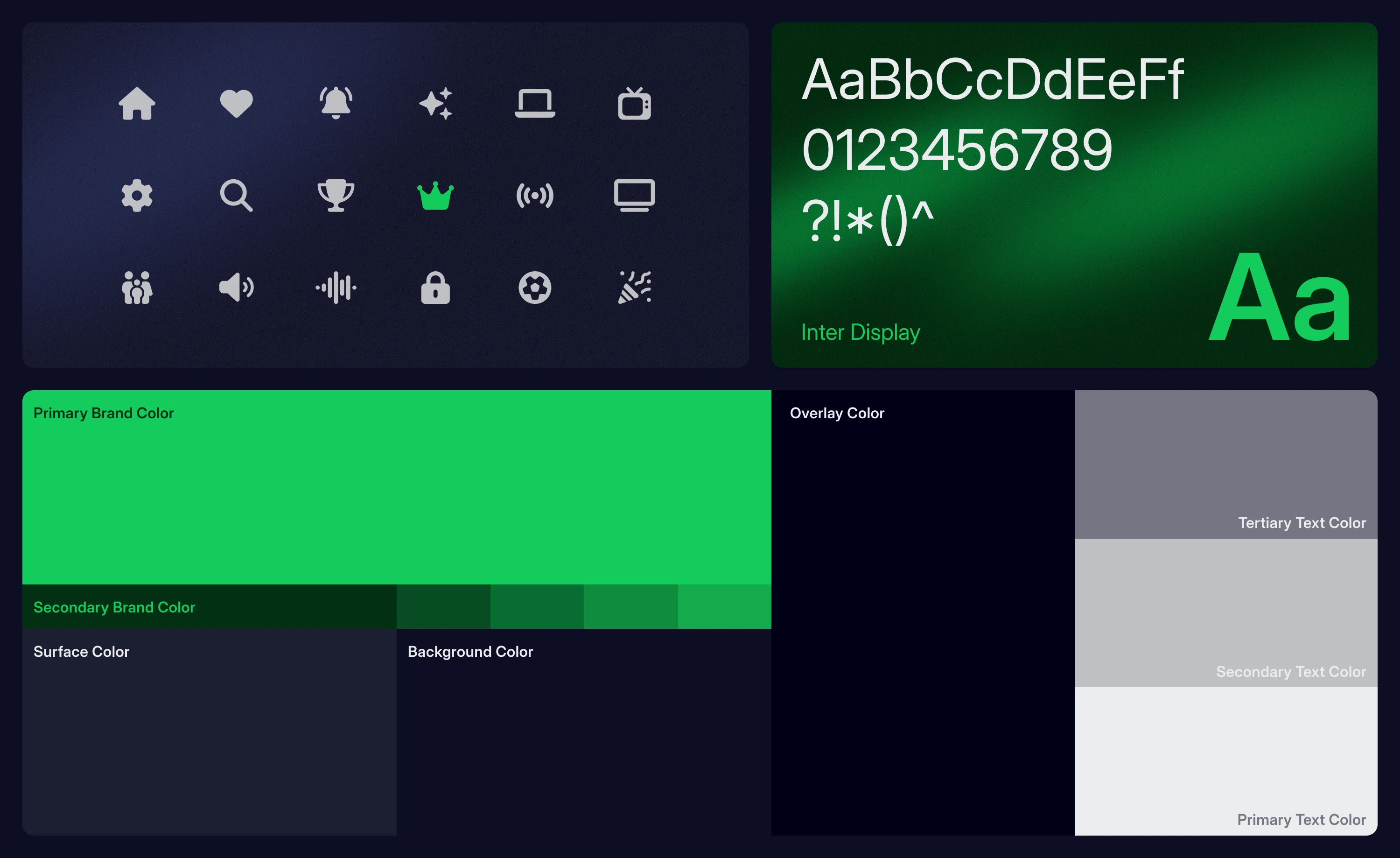
The design system became the common foundation, keeping the product recognizable without forcing every platform to work the same way.
Arabic wasn't treated as a translated version of an English product.
Navigation, layouts, components, hierarchy and content behavior were designed to work naturally in both directions from the beginning. The same system also needed to remain practical for engineering teams implementing it across several platforms.
Localization became part of the product architecture, not something added after the designs were finished.
TV added another layer entirely. Interfaces had to work from several feet away, with directional navigation, clear focus states and a visual hierarchy designed for a 10-foot experience.
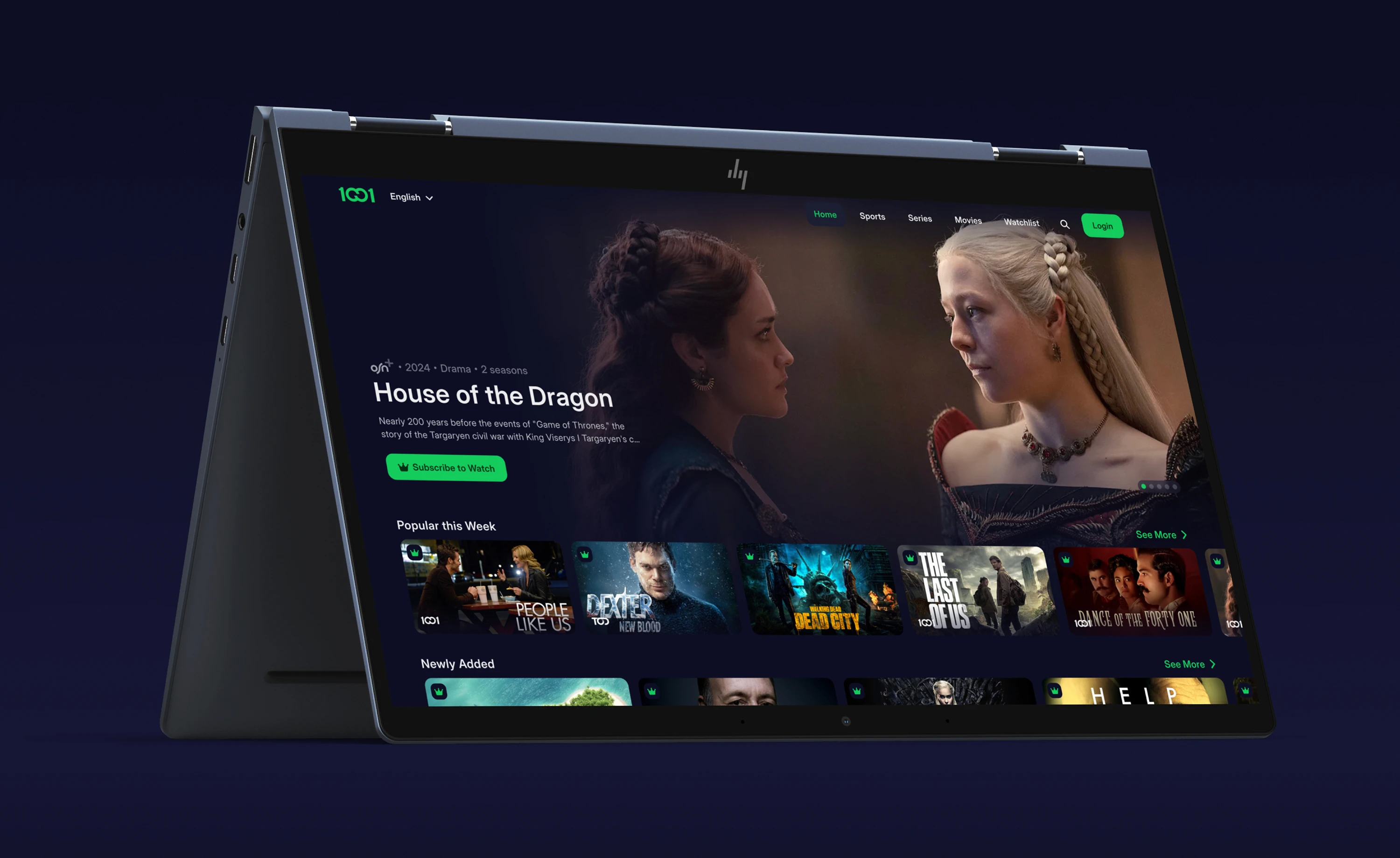
1001 ultimately launched across iOS, Android, web, tablets and Smart TVs, including Samsung and LG.
What started with one designer grew into a five-person UX team working alongside a much larger product and engineering organization, with the design system continuing to support the product as it expands.
A lot of the work behind 1001 is confidential. Happy to share more privately.