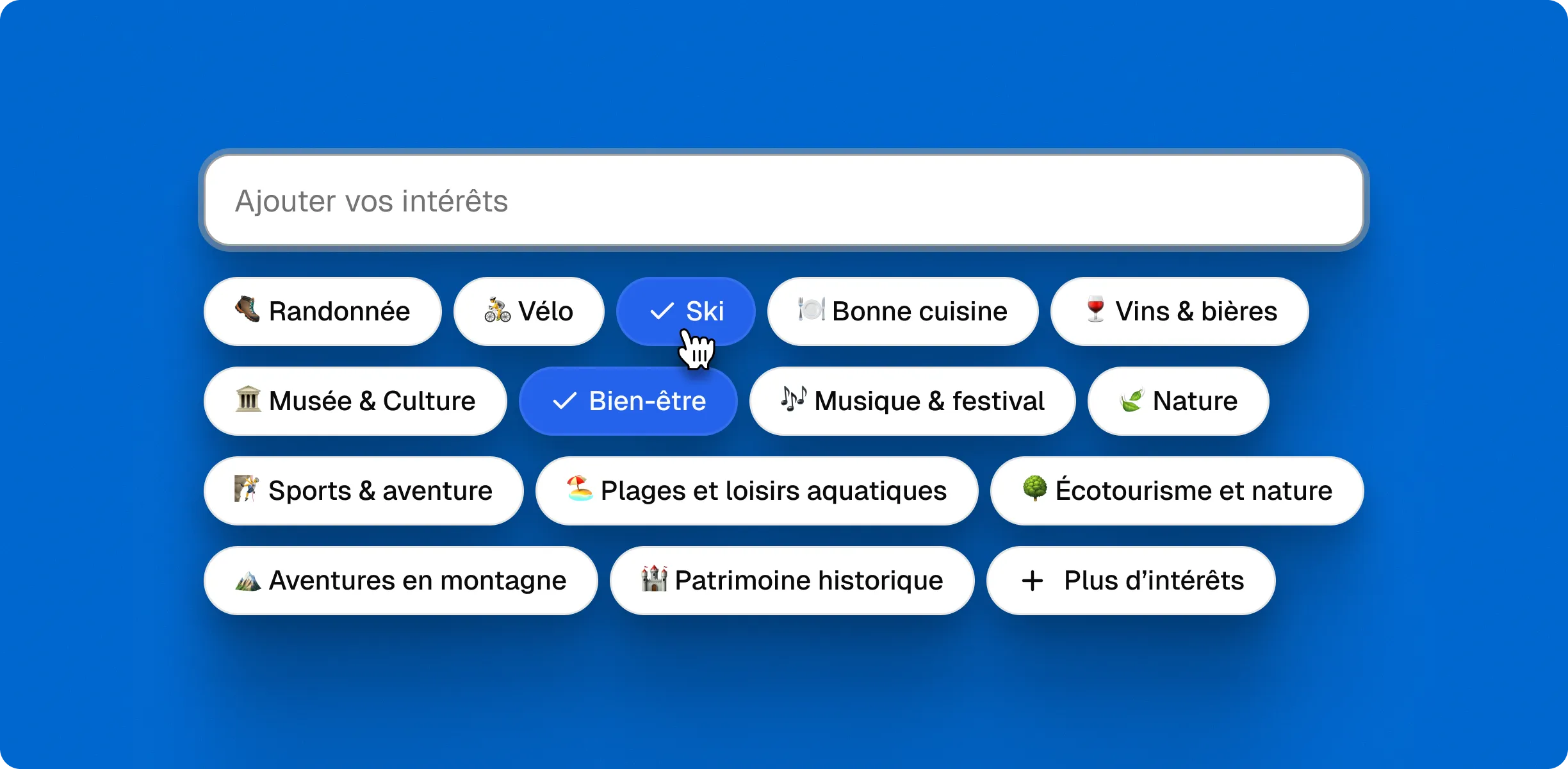


The challenge was turning a complex planning task into a simple guided experience. Users needed to provide dates, trip type, interests and preferences without feeling like they were filling out a long form.
We designed a short multi-step flow that progressively collects the information needed to generate a useful itinerary. Each step focuses on one decision, keeping the experience clear and lightweight.
The interaction was designed to feel familiar and approachable, with simple controls, clear hierarchy and enough flexibility for different types of travelers.


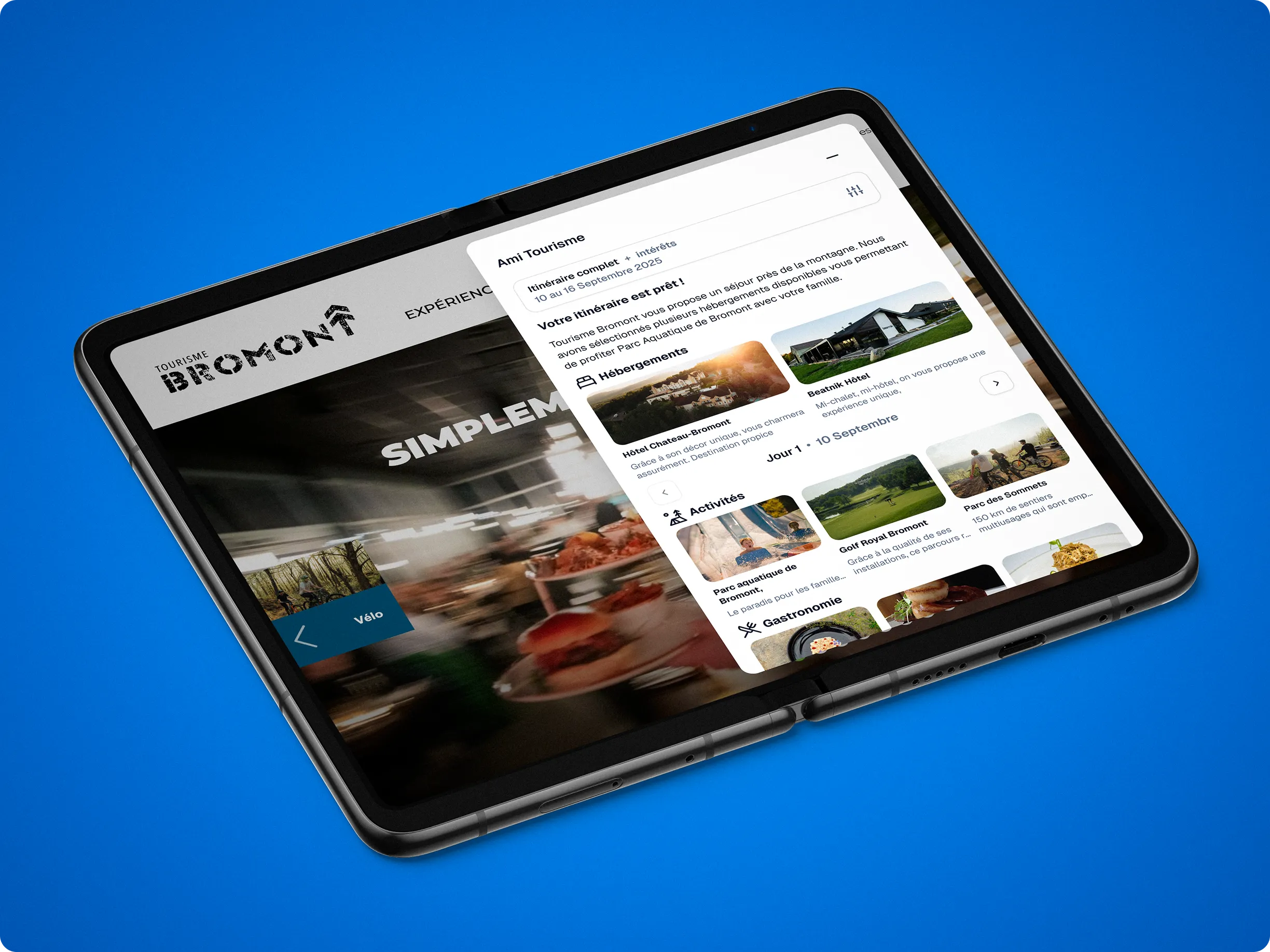
The generated itinerary brings together accommodations, activities, restaurants and local experiences in one structured view. The goal was to make AI output feel organized and immediately useful rather than like a long block of generated text.
Users can review their trip day by day and understand why each recommendation belongs in their itinerary. Visual cards help make destinations and activities easier to scan and compare.
The experience also allows users to refine their choices and regenerate recommendations without restarting the entire planning process.
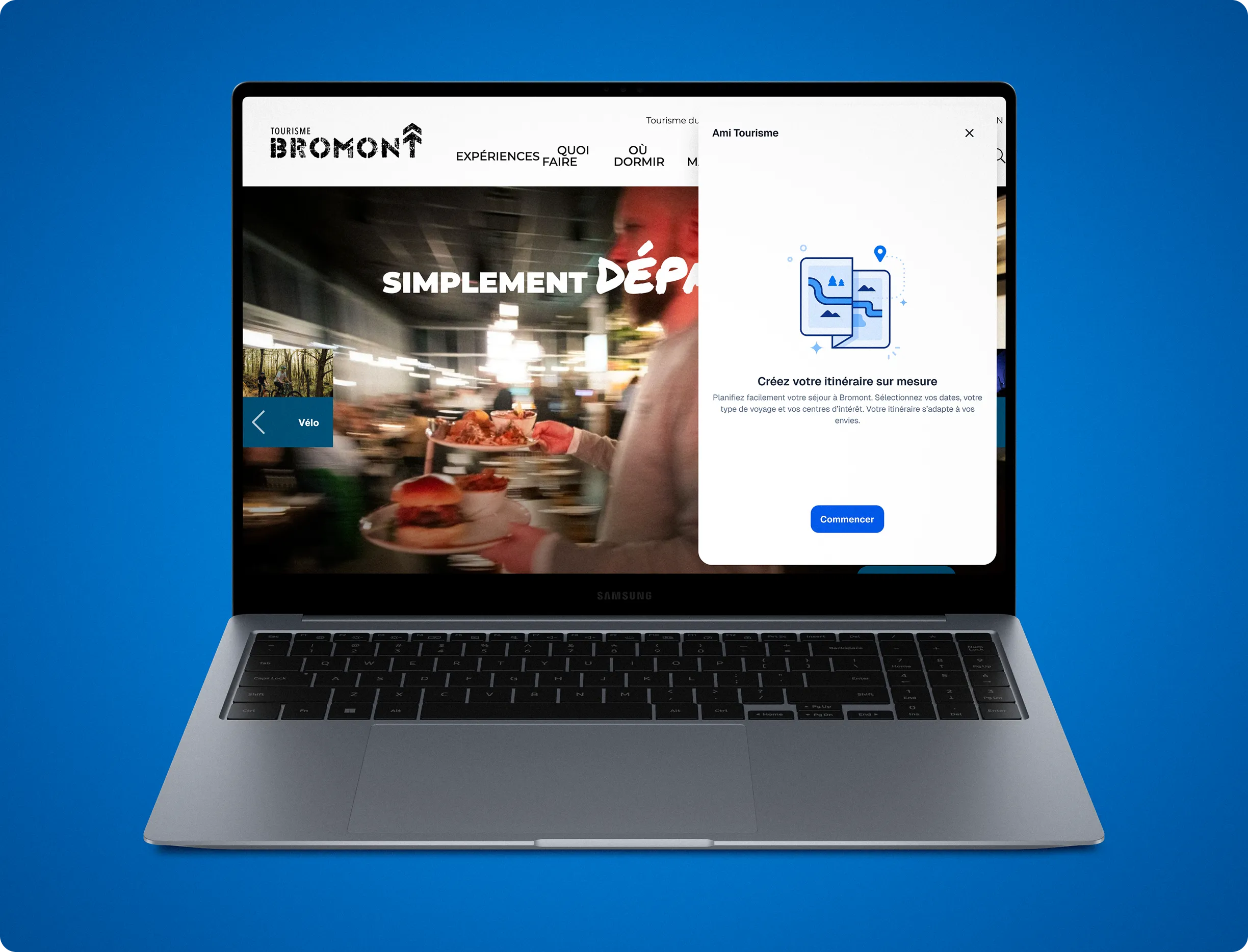

AMI Tourisme was designed as a white-label product rather than a one-off experience for a single destination. The interface can adapt to different tourism websites while keeping the core interaction consistent.
Working with Activis, we designed the system to support different cities and regions while adapting content, branding and recommendations to each destination.
The responsive experience works across mobile, tablet and desktop through a modular pop-up system that can integrate into existing tourism websites.